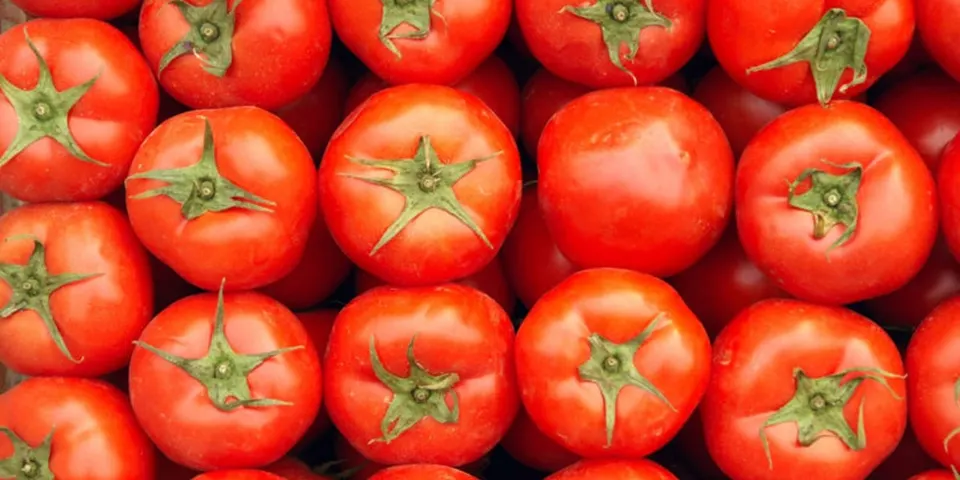
Another Italian region has stopped the serving of uncooked tomatoes in selected sites after reports of Salmonella infections.
A notice from authorities in Emilia-Romagna ordered a ban on the use of cherry tomatoes that have not undergone cooking by all private and public foodservice providers in schools, social care facilities, hospitals, and nursing homes.
Officials said action was taken based on the precautionary principle and to ensure maximum public health protection while investigations continue. Measures will apply until further notice. Anyone found breaching the order could face prosecution.
Infections linked to tomatoes
In several European countries and various Italian regions – including Emilia-Romagna – cases of salmonellosis caused by monophasic Salmonella Typhimurium and Salmonella Strathcona were detected during 2024, 2025, and 2026.
These cases have been linked, through epidemiological, microbiological, or genomic evidence, to the consumption of raw cherry and datterini tomatoes.
In Emilia-Romagna, surveillance of Salmonella infections in the region between 2024 and 2026 has identified 112 cases caused by Salmonella Strathcona and five monophasic Salmonella Typhimurium infections.
The notice referenced two outbreak assessments by the European Centre for Disease Prevention and Control (ECDC) and European Food Safety Authority (EFSA) in 2024 and 2025, as well as several notifications on the Rapid Alert System for Food and Feed (RASFF) platform.
Officials in Emilia-Romagna said the complex traceability of fresh tomato supply chains makes it difficult to identify the operators involved and product distribution details.
National and international impact
On Sept. 30, 2026, a national task force was convened. Experts found that recent outbreaks in Puglia, Lombardy, Lazio, and Friuli-Venezia Giulia were linked to fresh tomatoes contaminated with monophasic Salmonella Typhimurium sequence type 34 or Salmonella Strathcona sequence type 2559.
Authorities in Puglia had earlier suspended the serving of raw fresh tomatoes in food preparation centers and distribution points for institutional catering. This included nurseries, schools, social care and healthcare facilities, residential care homes and hospitals. Measures followed a rise in Salmonella Strathcona infections and detection of Salmonella in a batch of tomatoes from Caltanissetta.
Since July 2026, more than 160 infections have been recorded in 10 European countries.
In Austria, 21 confirmed and eight probable Salmonella Strathcona cases have been reported in seven federal states. The Robert Koch Institute (RKI) said recently that there are 39 patients associated with the outbreak in Germany since June. People are also sick in Denmark, France, Ireland, Luxembourg, the Netherlands, Norway and Sweden.
In late 2025, testing in Austria detected the outbreak strain in organic cherry tomatoes from Italy. The outbreak strain was also previously found in the irrigation water of a tomato producer in Sicily.