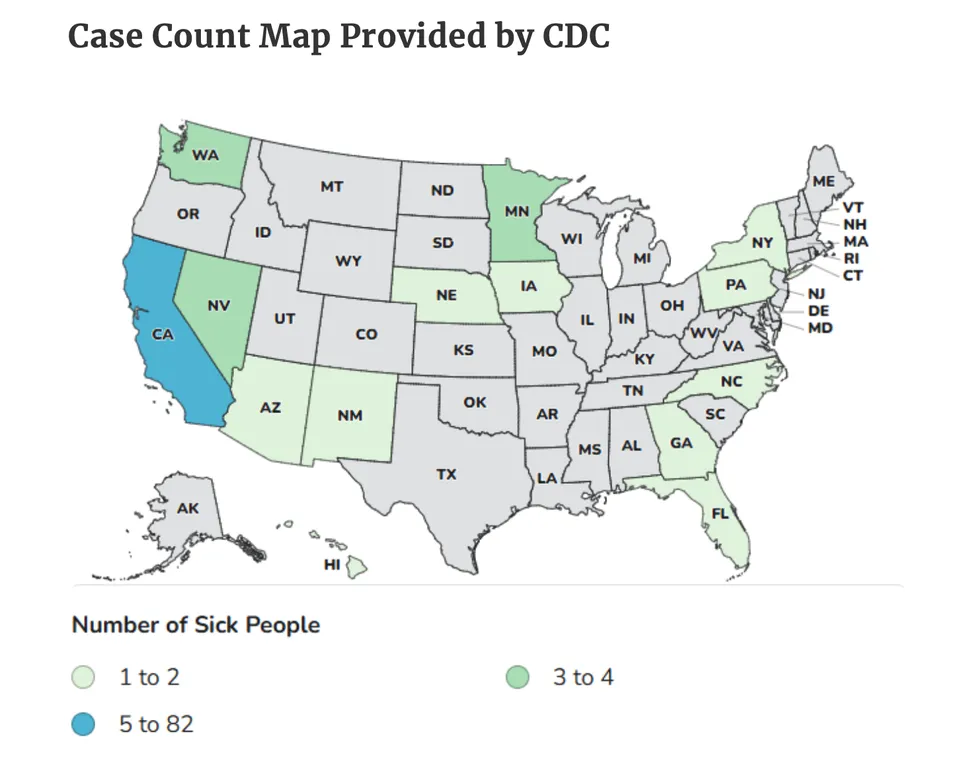
Summer is ending with more than 1,000 people infected with Salmonella because of contamination by backyard poultry flocks. All but one of the 50 states has backyard flock outbreaks.
The federal Centers for Disease Control and Prevention reports an additional 235 patients on the outbreak logs between July 19 and Aug. 30. And 175 of 1,003 Salmonella infections resulted in hospitalization in 49 states.
Two deaths, one from Texas and the other from Ohio, are associated with the backyard flock Salmonella outbreaks this year.
Of 850 ill people with age information available, 192, or 23 percent, are children younger than five.
Epidemiologic and laboratory evidence indicate that contact with backyard poultry, such as chicks and ducklings, from multiple hatcheries, are the likely source of these outbreaks.
In interviews, two out of three ill people reported contact with chicks or ducklings before becoming sick. People reported getting chicks and ducklings from several sources, including agricultural stores, websites, and hatcheries.
Six of the outbreak strains making people sick have been identified in samples collected from backyard poultry environments at people’s homes in California, Minnesota and Ohio and from poultry environments at retail stores in Michigan and Oregon.
Poultry can carry Salmonella germs that can make people sick. Backyard poultry owners should always follow steps to stay healthy around their poultry.
Advice to Backyard Flock Owners
- People can get sick with Salmonella infections from touching backyard poultry or the places where they live and roam. Backyard poultry can carry Salmonella bacteria but appear healthy and clean and show no signs of illness.
- Follow these tips to stay healthy with your backyard flock:
- Always wash your hands with soap and water right after touching backyard poultry or anything in the area where they live and roam.
-
- Adults should supervise handwashing by young children.
- Use an alcohol-based hand sanitizer with at least 60% alcohol if soap and water are not readily available.
- Don’t let backyard poultry inside the house, especially in areas where food or drink is prepared, served, or stored.
- Set aside a pair of shoes to wear while taking care of poultry and keep those shoes outside of the house.
- Children younger than 5, adults aged 65 and older, and people who have health problems or take medicines that lower the body’s ability to fight germs and sickness shouldn’t handle or touch chicks, ducklings, or other poultry.
- Don’t eat or drink where poultry live or roam.
- Don’t kiss backyard poultry or snuggle them and then touch your face or mouth.
- Stay outdoors when cleaning any equipment or materials used to raise or care for poultry, such as cages, or feed or water containers.
-
- For a complete list of recommendations, visit the Healthy Pets, Healthy People website section on backyard poultry.
Advice to stores that sell or display poultry
- Source birds sold from suppliers that have adopted the U.S. Department of Agriculture’s (USDA’s) best management practices to mitigate Salmonella contamination and those that voluntarily participate in the USDA’s National Poultry Improvement Plan (USDA-NPIP) U.S. Salmonella Monitored Program.
- Provide health information to owners and potential buyers of poultry before purchase. This should include information about the risk of getting a Salmonellainfection from contact with poultry.
- A sample flyer describes this risk and also recommends steps to prevent illness.
- Place health information in clear view where poultry are displayed.
- Provide handwashing stations or alcohol-based hand sanitizer with at least 60% alcohol next to poultry display areas. Tell customers to wash hands right after leaving these areas.
- Display poultry out of reach of customers, especially children, to prevent touching.
- Clean and sanitize the areas where poultry are displayed between shipments of new poultry. Be sure to remove debris first so that the disinfectant is applied to a surface that is generally clean. Apply the disinfectant on the surface for the proper contact time listed on the disinfectant label.
Advice to mail-order hatcheries
- Mail-order hatcheries should provide health-related information to owners and potential purchasers before they buy any poultry. This should include information about preventing Salmonella infections from contact with poultry.
- A sample flyer describes this risk and also recommends steps to prevent illness.
- Mail-order hatcheries should develop steps to help prevent contamination and infection of poultry with Salmonella:
- Mail-order hatcheries should participate in the voluntary USDA-NPIP U.S. Salmonella Monitored Program, in which mail-order hatcheries certify their flocks are monitored for Salmonella bacteria that may cause illness in humans. This program aims to reduce the incidence of Salmonella in day-old poultry in the hatchery and give the poultry industry a better opportunity to reduce the incidence of Salmonella in their products.
Symptoms of Salmonella infection
- Most people infected with Salmonella develop diarrhea, fever, and stomach cramps 12 to 72 hours after being exposed to the bacteria.
- The illness usually lasts 4 to 7 days, and most people recover without treatment.
- In some people, the illness may be so severe that the patient needs to be hospitalized. Salmonella infection may spread from the intestines to the bloodstream and then to other places in the body.
- In rare cases, Salmonella infection can cause death unless the person is treated promptly with antibiotics.
- People more likely to get a serious illness are children younger than 5, adults aged 65 and older, and people who have health problems or take medicines that lower the body’s ability to fight germs and sickness.
- For more information, see the CDC Salmonella website.
Investigation details
CDC and public health officials in several states are investigating multiple multistate outbreaks of Salmonella infections with serotypes Agona, Alachua, Altona, Anatum, Braenderup, Enteritidis, Infantis, Manhattan, Montevideo, Muenchen, Newport, and Oranienburg linked to contact with backyard poultry. Salmonella serotype Altona was added to the investigation since the last update.
As of August 23, 2019, a total of 1003 people infected with the outbreak strains of Salmonellahave been reported from 49 states. A list of the states and the number of cases in each is on the map of reported cases page.
Illnesses started on dates from January 1, 2019, to August 9, 2019. Ill people range in age from less than 1 year to 99 years, with a median age of 32 years. Of 850 ill people with age information available, 192 (23%) are children younger than 5 years. Fifty-seven percent are female. Of 605 people with information available, 175 (29%) have been hospitalized. Two deaths have been reported.
Whole genome sequence (WGS) analysis of 149 bacterial isolates from ill people predicted antibiotic resistance or decreased susceptibility to one or more of the following drugs: amoxicillin-clavulanic acid, ampicillin, azithromycin, cefoxitin, ceftriaxone, chloramphenicol, ciprofloxacin, fosfomycin, gentamicin, kanamycin, nalidixic acid, streptomycin, sulfisoxazole, tetracycline, and trimethoprim-sulfamethoxazole. Testing of eight isolates by CDC’s National Antimicrobial Resistance Monitoring System (NARMS) laboratory using standard antibiotic susceptibility testing confirmed these results. If antibiotics are needed, this resistance profile may affect the choice of antibiotic.
WGS analysis of an additional 512 isolates from ill people did not show evidence of antibiotic resistance. Testing of 30 of these isolates by CDC’s NARMS laboratory using standard antibiotic susceptibility testing confirmed these results.
Six of the outbreak strains making people sick have been identified in samples collected from backyard poultry environments at people’s homes in California, Minnesota and Ohio, and from poultry environments at retail stores in Michigan and Oregon.
In interviews, ill people answered questions about animal contact in the week before they became ill. Of 511 people interviewed, 343 (67%) reported contact with backyard poultry before becoming ill. Ill people reported buying poultry from various sources, including agricultural stores, websites, and hatcheries.
Backyard poultry from multiple hatcheries are the likely source of these outbreaks. Regardless of where poultry are purchased, they can carry Salmonella germs that can make people sick. Backyard poultry owners should always follow steps to stay healthy around their poultry.
This investigation is ongoing, and CDC will provide updates when more information becomes available.
(To sign up for a free subscription to Food Safety News, click here.)