
Contributed
Your soon-to-be 6-year-old wants you to bake elaborately decorated holiday cookies and cakes in the shapes of of the season. You’ve found a cake-decoration video online, but it uses ingredients that make you wonder if they are safe to eat.
The food and Drug Administration wants you to be aware that some decorative glitters and dusts promoted for use on foods may, in fact, contain materials that should not be eaten. Non-toxic does not mean edible, so if you’re not sure about a product, select something else.
Many decorative glitters and dusts are sold over the internet and in craft and bakery supply stores under names such as luster dust, disco dust, twinkle dust, sparkle dust, highlighter, shimmer powder, pearl dust, and petal dust. Moreover, a variety of online instructional videos, blogs, and articles promote the use of these glitters and dusts to decorate foods such as cakes, cupcakes, and cake pops.
To view an FDA video about food decorations that should not be eaten, please click here.
There are some glitters and dusts that are edible and produced specifically for use on foods. These products are made from ingredients that are safe to eat. But others may not.
Edible or Non-Edible
There are easy things you can do to determine what’s edible and what’s non-edible:
- Carefully check the label of any decorative product you’re considering for use in foods. Companies that make edible glitters and dusts are required by law to include a list of ingredients on the label.
- Common ingredients in edible glitter or dust include sugar, acacia (gum arabic), maltodextrin, cornstarch, and color additives specifically approved for food use, including mica-based pearlescent pigments and FD&C colors such as FD&C Blue No. 1.
- Most edible glitters and dusts also state “edible” on the label. If the label simply says “non-toxic” or “for decorative purposes only” and does not include an ingredients list, you should not use the product directly on foods.
- If you choose to decorate a food item with decorations that are not edible, be sure to remove the decorations before serving and eating the food.
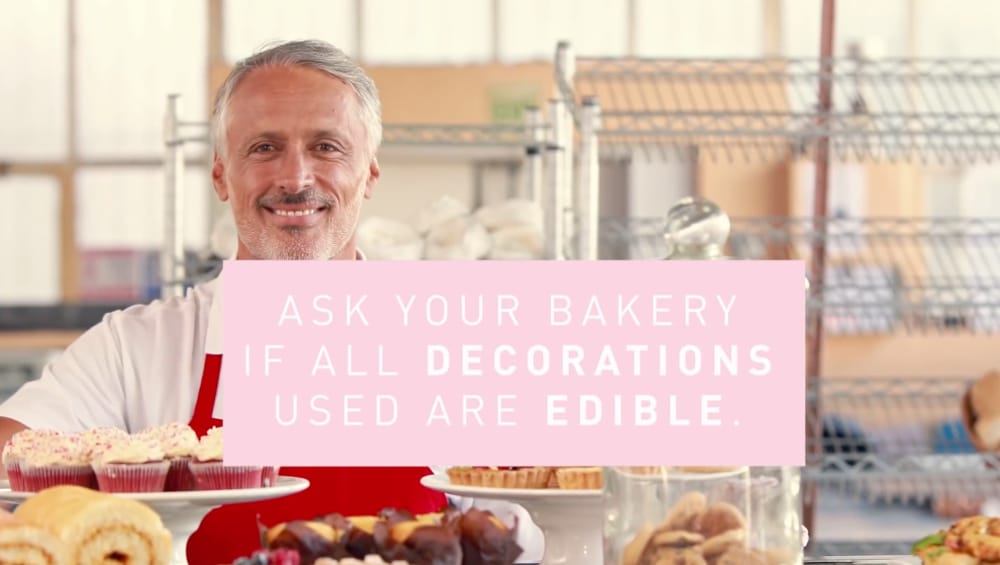
Buying, not baking? Talk to your baker
Talk to your bakery about the types of decorative products they use in their baked goods. Are they made with all edible ingredients?
When in doubt, ask to see the labels of the decorative products to ensure they are edible. And be informed about the glitter and dust products sold on the Internet. Ask the seller to provide ingredient information from the manufacturer before you buy.
A Note to Commercial Bakers
FDA reminds all commercial bakers that it is your responsibility as a food manufacturer to produce food that complies with the Federal Food, Drug and Cosmetic Act and applicable FDA regulations. Manufacturers of food containing unsafe ingredients are potentially subject to FDA enforcement actions to keep unsafe products out of the marketplace.
If you have specific questions about the regulatory status of ingredients in glitter and dust used in food decorating, contact the Office of Food Additive Safety at premarkt@fda.hhs.gov.
(To sign up for a free subscription to Food Safety News, click here.)


