The number suspected ill in an E. coli outbreak connected to a Belfast restaurant has risen to at least 282, Northern Ireland’s Public Health Agency announced on Tuesday. The number ill consists of 119 laboratory-confirmed cases and another 163 probable cases. Probable cases are those with exposure and corresponding symptoms, but who have not been tested for E. coli infection in a clinical laboratory. The restaurant, Flicks, was also connected to an E. coli outbreak in August that sickened four people. On Sunday the PHA announced that the two outbreaks were isolated incidents and the bacteria involved differed genetically. Flicks voluntarily closed on October 9 pending a public health investigation into the cause of the outbreak. In an interview with BBC, a Northern Ireland health official said that no E. coli outbreaks in the country prior to this had exceeded 20 cases, calling this one the nation’s “worst ever.” Illnesses first arose around September 24. The PHA encourages anyone who ate at the restaurant and experienced symptoms of E. coli infection to contact them immediately.
The News Desk team at Food Safety News covers breaking developments, regulatory updates, recalls, and key topics shaping food safety today. These articles are produced collaboratively by our editorial staff.
Authorities in Lithuania are investigating two cases of foodborne botulism linked to fish sold at a market.
The State Food and Veterinary Service (VMVT) conducted an inspection at a market
Parents in Arizona are reporting that their children became infected with E. coli after interaction with animals at the Arizona State Fair petting zoo.
A non-profit group that works with
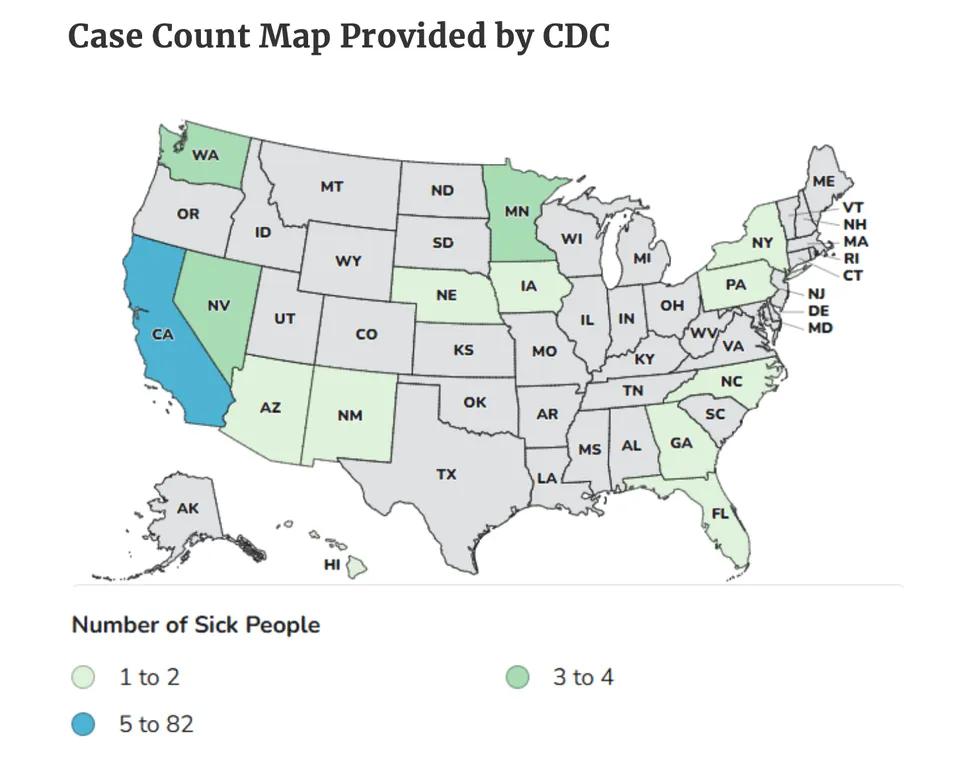
A Salmonella Enteritidis outbreak traced to eggs that sickened more than 100 people has been declared over by the Centers for Disease Control and Prevention.
There were 105 confirmed patients
Nalpac is voluntarily recalling DTF Sexual Chocolate it purchased and resold because it has been found to contain sildenafil and tadalafil.
Sildenafil and tadalafil are the active ingredients in the
The USDA’s Food Safety and Inspection Service (FSIS) is retracting the public health alert issued on April 1 for Walmart Great Value Fully Cooked Dino Shaped Chicken Breast Nuggets
Karns Foods is recalling its approximate 8-ounce packages of "Mini Dark Chocolate Raspberry Cups" because they may contain undeclared peanuts. People who have allergies to peanuts run the
Wawa of Media, PA, is recalling its 16-ounce bottles of Wawa Iced Tea Lemon, Wawa Iced Tea Diet Lemon, Wawa Diet Lemonade and Wawa Fruit Punch produced by the Wawa