
As of December 23, 2025, 64 people infected with the outbreak strain of Salmonella Telelkebir have been reported from 22 states: Illinois 1, Kentucky 1, Maine 1, Missouri 1, North Carolina 1, South Dakota 1, Tennessee 1, Maryland 1, Arizona 3, California 2, Colorado 3, Connecticut 2, Delaware 2, Florida 3, Massachusetts 3, South Carolina 3, Texas 2, Georgia 4, New Jersey 6, Virginia 6, New York 7, Pennsylvania 10. Of 44 people with the information available, 20 have required hospitalization.
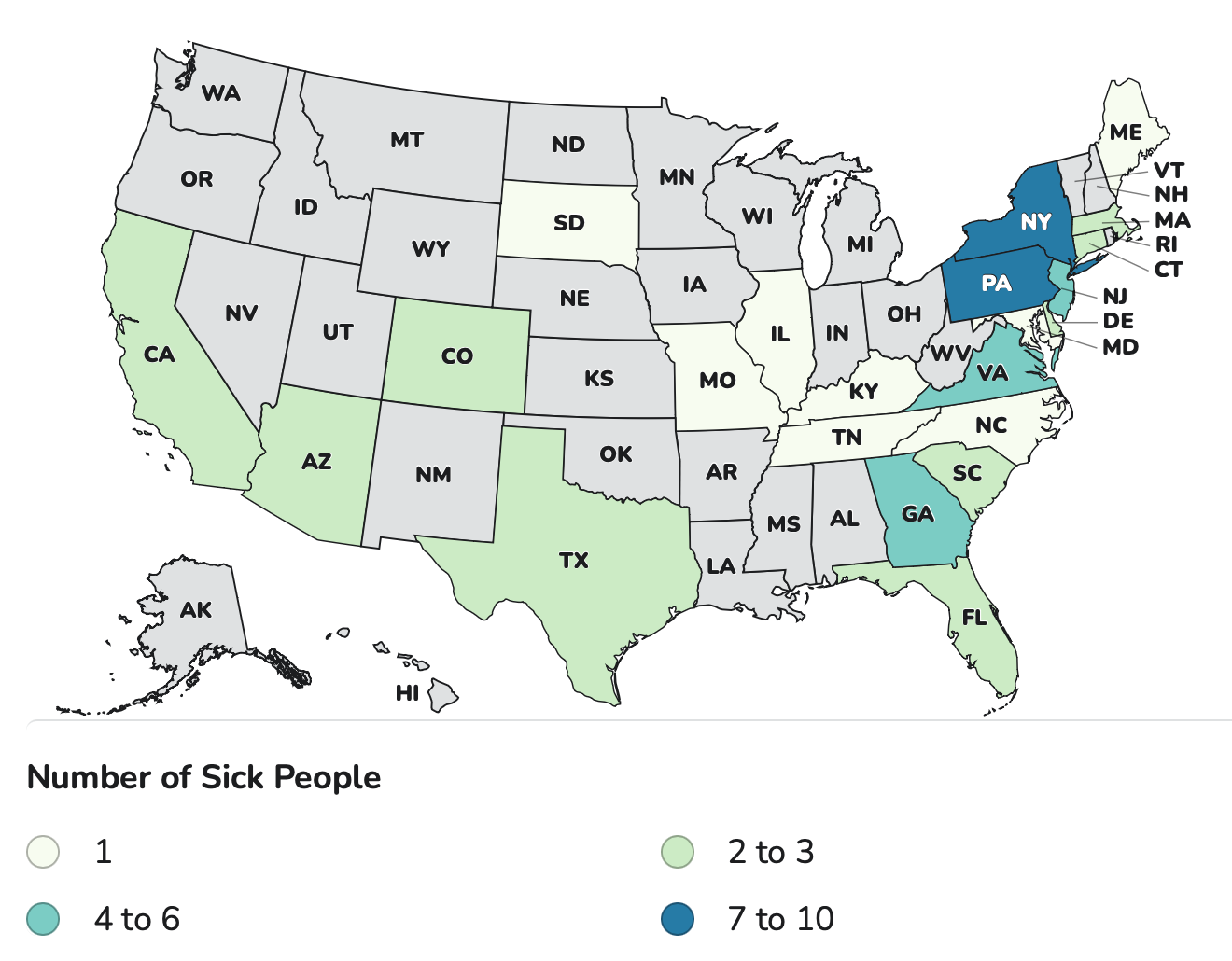
The true number of sick people in this outbreak is likely much higher than the number reported, and the outbreak may not be limited to the states with known illnesses. This is because many people recover without medical care or are not tested for Salmonella. The CDC estimates that for every person confirmed as a patient in a Salmonella outbreak there are 29 who go undetected.
State and local public health officials are interviewing patients to determine what they have in common. So far, 20 of 27 people interviewed reported eating raw oysters before becoming sick.
Public health investigators are also using the PulseNet system to identify illnesses that may be part of this outbreak. CDC PulseNet manages a national database of DNA fingerprints of bacteria that cause foodborne illnesses. DNA fingerprinting is performed on bacteria using a method called whole genome sequencing (WGS).
WGS showed that bacteria from sick people's samples are closely related genetically. This suggests that people in this outbreak may have gotten sick from the same food.
As yet, the Food and Drug Administration has not narrowed the search to any single brand of oysters. It is not unusual for oysters to be contaminated with pathogens. Therefore, health officials recommend that they not be consumed raw.


