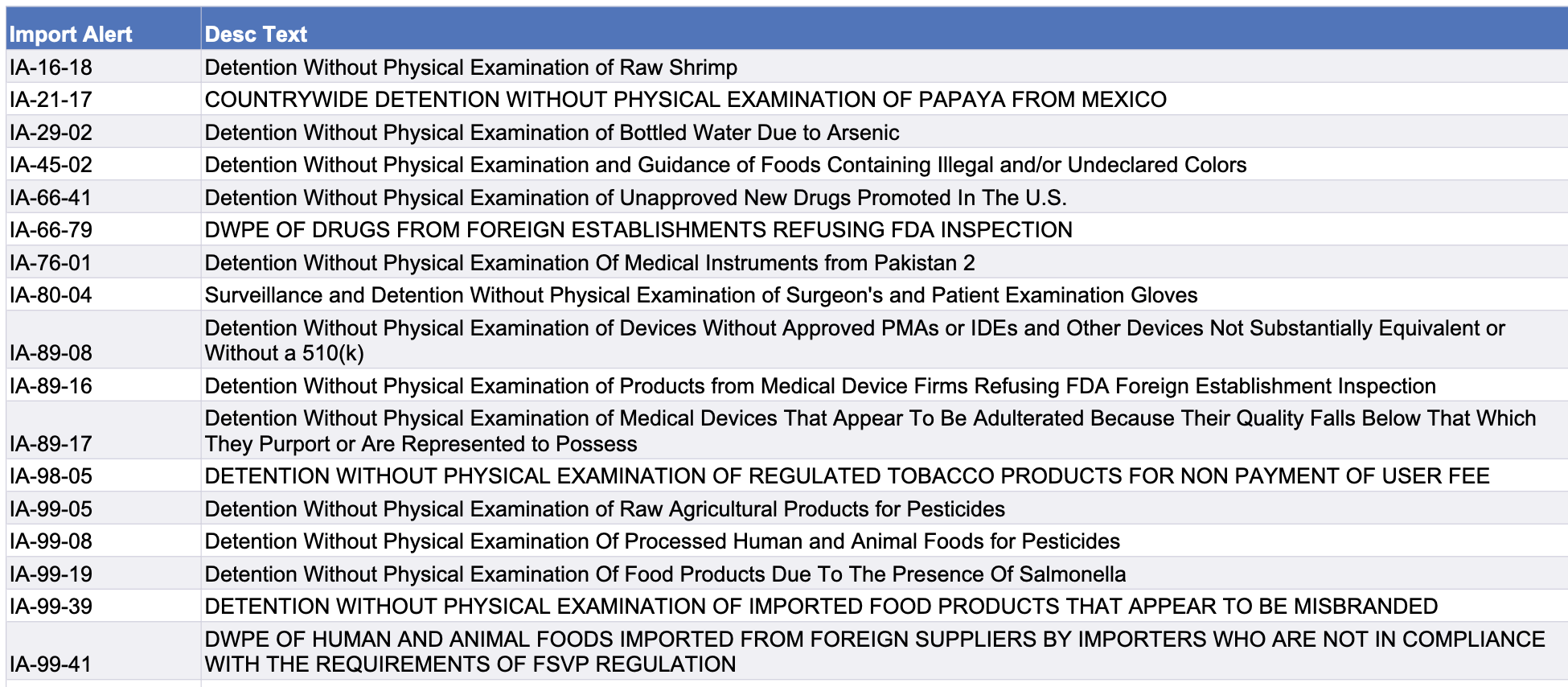
The Food and Drug Administration uses import alerts to enforce U.S. food safety regulations for food from foreign countries. The agency updates and modifies the alerts as needed.
Recent modifications to FDA’s import alerts, as posted by the agency, are listed below. Click here to go to the FDA page with links for specific details about this week’s various alert modifications.
Click on chart to enlarge.
(To sign up for a free subscription to Food Safety News, click here.)
The News Desk team at Food Safety News covers breaking developments, regulatory updates, recalls, and key topics shaping food safety today. These articles are produced collaboratively by our editorial staff.
As part of its enforcement activities, the Food and Drug Administration sends warning letters to entities under its jurisdiction. Some letters are not posted for public view until weeks or
As part of its enforcement activities, the Food and Drug Administration sends warning letters to entities under its jurisdiction. Some letters are not posted for public view until weeks or
The Food and Drug Administration uses import alerts to enforce U.S. food safety regulations for food from foreign countries. The agency updates and modifies the alerts as needed.
Recent
As part of its enforcement activities, the Food and Drug Administration sends warning letters to entities under its jurisdiction. Some letters are not posted for public view until weeks or
Mama Grande Tortilla Factory of Mission, TX, is recalling Gorditas de Azucar and Doraditas de Azucar because they may contain undeclared wheat and soy.
People who have an allergy or