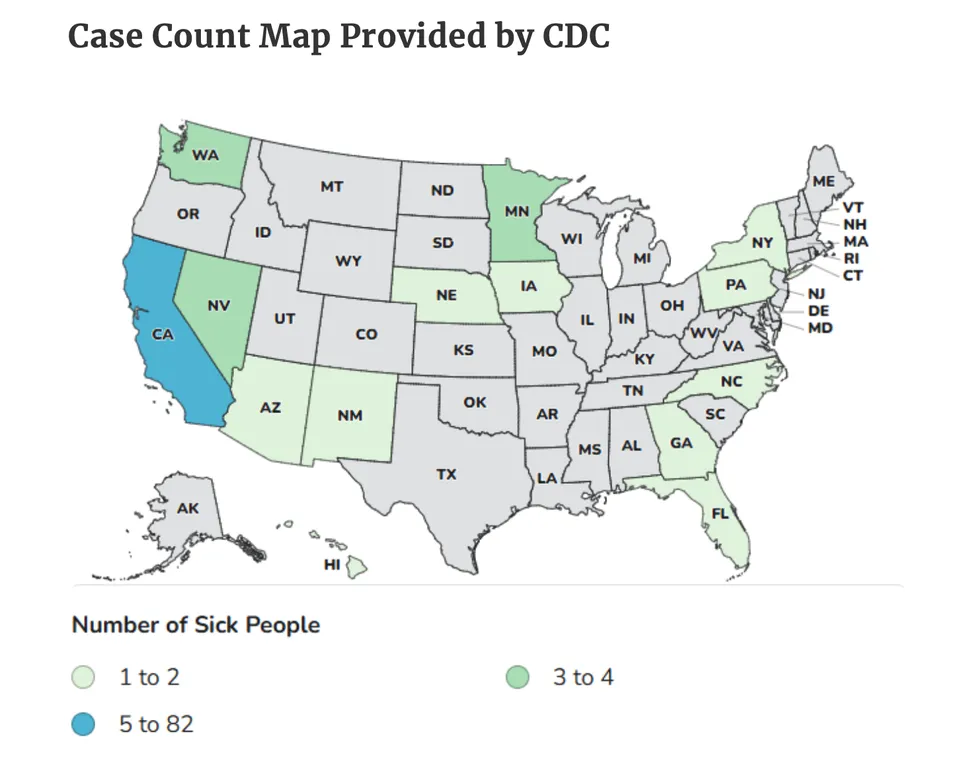
The E.coli outbreak involving several Seattle area restaurants has grown to include 13 cases, up from the original six. The number hospitalized has reached three, up from one. Six Evergreen restaurants, up from four, may have spread the infection.
Those six restaurants include:
- Pioneer Square (106 1st Ave S, Seattle)
- University District (4609 Village Ter NE, Seattle)
- Downtown (823 3rd Ave, Seattle)
- Chinatown-International District (504 5th Ave S, Seattle)
- Sammamish Highlands (600 228th Ave NE, Sammamish)
- Seattle-Tacoma International Airport (17801 International Blvd, Seattle)
Seattle-King County Public Health is continuing the investigation, and reports all meal dates occurred between Nov.5 and 11, 2019. The outbreak of Shiga toxin-producing E. coli (STEC) potentially associated with Evergreens restaurants in Seattle was first reported on Nov. 26, 2019.
Public health does not yet have conclusive results about what caused the outbreak and reports that the Evergreen restaurants have excellent inspection records.
Here’s the Dec. 6 update from Public Health:
Summary
Public Health is continuing to investigate an outbreak of Shiga toxin-producing E. coli O157: H7 (STEC) potentially associated with six Evergreens restaurants in Seattle. It does not yet have conclusive results about what caused the outbreak.
Genetic testing on isolates from ten of the thirteen cases indicates that the strains are closely related, suggesting a common source. The other three cases were among people who were sick with symptoms suggestive of E. coli infection but never were tested.
Currently, available data indicates that these closely related strains among people who ate at Evergreens are different from the strain currently causing a national outbreak of E. Coli associated with romaine lettuce grown in Salinas, California.
Illnesses
Since November 20, 2019, we have learned of thirteen people in Washington (12 in King County and one in Snohomish County) who developed symptoms consistent with an E. Coli illness after consuming food from six different Evergreens restaurants in King County.
Illness onsets occurred during November 8–15, 2019. Meal dates were during November 5–11, 2019.
Three people were hospitalized. Everyone who reported illness has recovered.
E. coli symptoms include diarrhea (bloody or non-bloody), stomach cramps, and nausea.
Actions
From November 21 to December 4, 2019, Environmental Health investigators visited 5 of the Evergreens locations where the ill people reported eating and are planning to visit the 6th location. During their field inspections, investigators did not observe environmental or behavioral risk factors associated with the spread of E. coli, such as poor handwashing practices or improper time and temperature control of foods. Public Health identified one employee who experienced symptoms consistent with an E. coli infection after eating at Evergreens but who was not tested. There is no evidence indicating the person is the source of the outbreak.
Public Health investigators reviewed with staff at five locations proper sanitizing practices to help prevent the spread of E. coli. In accordance with CDC’s recommendations, Evergreens restaurants discarded all romaine lettuce products from their stores, including romaine on the line and in coolers. During their visits, investigators also reviewed the requirement that restaurant employees are not allowed to work while having vomiting or diarrhea; restaurant management reviewed their sick policy with all employees.
As per our protocol, Public Health investigators have revisited five Evergreens restaurant locations where ill cases reported eating to confirm that these actions were taken. Out of an abundance of caution, Environmental Health investigators plan to visit all Evergreens restaurants (total of 15 locations) in King County in the next two weeks.
This local outbreak could be the result of a contaminated product delivered to and served at Evergreens. Public Health collected samples of various product samples from two Evergreens locations where the ill people ate. E. coli testing of these food products at Washington State Public Health Laboratory were negative.
Public Health is working with the Washington State Department of Agriculture and the United States Food and Drug Administration to trace back the distributors and sources for ingredients consumed by the people who became ill. Traceback is used to identify other points of contamination up the supply chain.
Laboratory testing
Ten of 13 people reporting illness tested positive for E. coliO157: H7. All 10 isolates shared closely related E. coli genetic fingerprints, suggesting that they have a common source of infection. Genetic testing completed on these 10 isolates did not match the genetic fingerprint of the strain currently associated with the national outbreak linked to romaine lettuce. The remaining three people who got sick were not tested for STEC, but their symptoms are suggestive of an E. coli infection.
About STEC
E. coli bacteria normally live in the intestines of humans and animals. Many strains of E. coli bacteria exist, and most of them are harmless or beneficial to human health. STEC are strains of E. coli that produce Shiga toxin (such as E. coli O157: H7) and can cause serious illness in people.
Infection with STEC can occur through consumption of undercooked ground beef and other beef products; unpasteurized (raw) milk, cheese, and juice; contaminated raw fruits, vegetables, sprouts, and herbs; water contaminated with animal feces, or by direct contact with farm animals or their environment. Ready-to-eat foods can also be contaminated with STEC through contact with raw beef or raw beef juices in the kitchen.
Symptoms of STEC include diarrhea (which often becomes bloody) and stomach cramps, with mild or no fever. Illness typically lasts several days and people can spread the infection to others even after symptoms resolve.
- STEC infections usually resolve in 5–7 days, but recovered individuals may still spread the bacteria. Up to one-third of children may continue to excrete STEC for as long as 3 weeks.
- People sick with suspected STEC infection should not work in food handling, patient care, or childcare settings, and children sick with suspected STEC infection should not attend daycare until they have seen a healthcare provider and been tested for STEC infection, even if their illness is mild. People with a STECinfection who work in or attend these sensitive settings must be cleared by Public Health before returning.
Prevention
General advice for reducing the risk of contracting STEC:
- Avoid eating high-risk foods, especially undercooked ground beef and other beef products, unpasteurized (raw) milk or juice or cheese, and raw sprouts.
- Use a food thermometer to make sure that ground beef has reached a safe internal temperature of 160° F.
- Wash hands before preparing food, after diapering infants, and after contact with cows, sheep, or goats, their food or treats, or their living environment.
- Thoroughly wash fresh produce before eating.
(To sign up for a free subscription to Food Safety News, click here.)