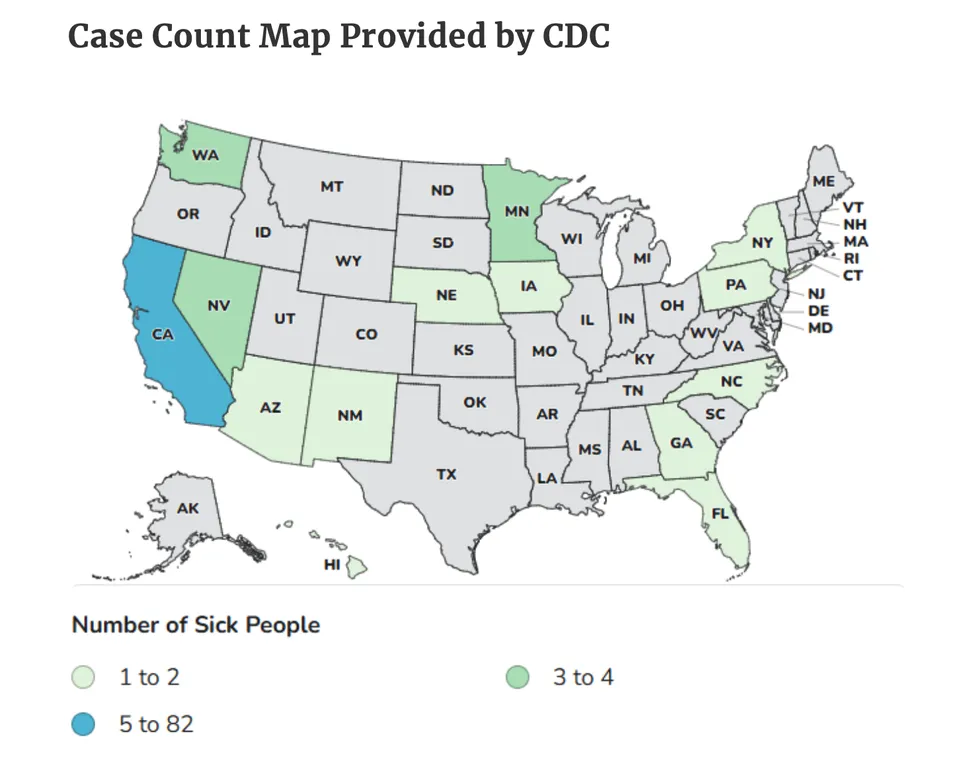
There’s a new E. coli O157:H7 outbreak caused by romaine lettuce and this time the federal Centers for Disease Control and Prevention in Atlanta is taking the tough love approach.
In announcing the new outbreak, CDC Tuesday said consumers, restaurants, and retailers should not eat, serve or sell any romaine lettuce until federal food safety detectives get to the bottom of this outbreak.
CDC and the U.S. Food and Drug Administration (FDA) along with public health and regulatory officials in several states and Canada are investigating another multistate outbreak of E. coli O157: H7 infections involving romaine. It is the second outbreak of 2018 caused by E. coli-contaminated romaine.
Thirty-two illnesses have been reported from 11 states, including 13 people who have been hospitalized. One person developed hemolytic uremic syndrome, a type of kidney failure. No deaths have been reported.
Epidemiologic evidence from both the United States and Canada indicates that romaine lettuce is a likely source of the outbreak. Illnesses started on dates ranging from October 8, 2018, to October 31, 2018.
Ill people in this outbreak were infected with E. coli bacteria with the same DNA fingerprint as the E. coli strain isolated from sick people in a 2017 outbreak linked to leafy greens in the United States and to romaine lettuce in Canada. This latest outbreak is not related to the multistate outbreak of E. coli O157: H7 infections linked to romaine lettuce that was over in June.
For that outbreak, the federal agencies advised consumers to avoid eating romaine lettuce grown in the Yuma, AZ growing region. They did not then suggest not eating any romaine lettuce as did some large consumer organizations.
CDC said the new investigation is ongoing and consumer guidance will be updated as more information becomes available. For now, however, CDC says:
- Consumers who have any type of romaine lettuce in their home should not eat it and should throw it away, even if some of it was eaten and no one has gotten sick.
- This advice includes all types or uses of romaine lettuce, such as whole heads of romaine, hearts of romaine, and bags and boxes of precut lettuce and salad mixes that contain romaine, including baby romaine, spring mix, and Caesar salad.
- If you do not know if the lettuce is romaine or whether a salad mix contains romaine, do not eat it and throw it away.
- Restaurants and retailers should not serve or sell any romaine lettuce, including salads and salad mixes containing romaine.
- People with symptoms of an E. coli infection, such as severe stomach cramps, diarrhea (often bloody), and vomiting, and think you might have gotten sick from eating romaine lettuce, should talk to their doctor and report their illness to the health department.
Antibiotics are not recommended for patients with E. coli O157 infections. Antibiotics are also not recommended for patients in whom E.coli O157 infection is suspected until diagnostic testing rules out this infection.
(To sign up for a free subscription to Food Safety News, click here.)