A Florida company is recalling almost a ton of meat and poultry products including several varieties of empanada because they were produced without being inspected by the federal government.
For photos of all of the recalled products, click the image.
Panna Café Express To Go Inc. in North Miami Beach, FL, recalled the 18 products Sunday. The 1,951 pounds of heat-treated, not-fully-cooked products were produced and packed between June 2 and Aug. 17, according to the recall notice from the USDA’s Food Safety and Inspection Service (FSIS). “These items were shipped to food service, distributors, and retail locations in Florida. The problem was discovered when FSIS personnel visited the uninspected facility following their application for a federal grant of inspection that had not yet been approved,” according to the recall notice. “Consumers who have purchased these products are urged not to consume them. These products should be thrown away or returned to the place of purchase.” The products were shipped to foodservice operations, distributors and retail locations in Florida. The recalled products can be identified by the establishment number “EST. 40245 or P-40245” inside the USDA mark of inspection and the following label information:
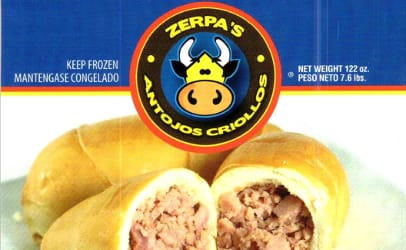
To view photos of all of the recalled products, click this image. 7.6-lb. tray packages containing 20 units of raw “ZERPA’S ANTOJOS CRIOLLOS CACHITOS HAM FILLED BREAD” with best by dates of Feb. 15, 16, 17, or 23, 2017 and bearing UPC code 854631003448.
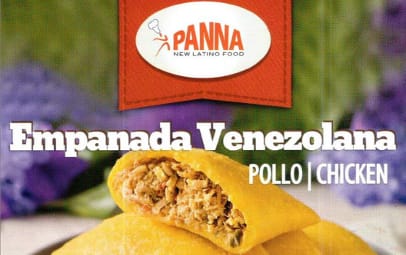
2.2-lb. tray packages containing 6 units of heat and serve “PANNA NEW LATINO FOOD EMPANADA VENEZOLANA POLLO CHICKEN” with best by dates of Dec. 2, 3, 8, 2016, or Feb. 15, 16, 17, 2017 and bearing UPC code 820103507561.
1.4-lb. tray packages containing 6 units of heat and serve “PANNA NEW LATINO FOOD EMPANADA To view photos of all of the recalled products, click the image. ARGENTINA POLLO CHICKEN” with best by dates of Feb. 15 or 17, 2017 and bearing UPC code 820103507509.
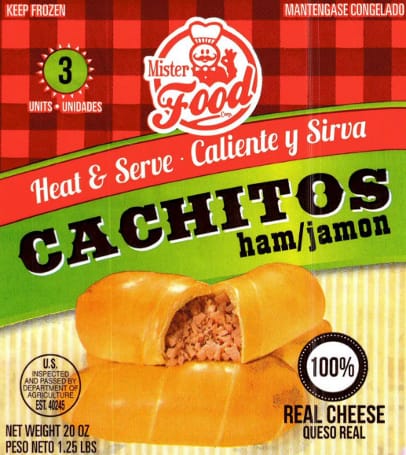
1.25-lb. tray packages containing 3 units of heat and serve “MISTER FOOD CACHITOS HAM/JAMON” with best by dates of Feb. 15, 16, or 17, 2017 and bearing UPC code 856305006038.
1.25-lb. tray packages containing 3 units of heat and serve “PANNA TO GO CACHITO DE JAMON Y QUESO HAM AND CHEESE CACHITO” with best by dates of Feb. 15, 16, or 17, 2017 and bearing UPC code 815026020174.
60-unit cases of raw “MISTER FOOD CACHITO DE JAMON Y QUESO HAM & CHEESE WRAPPED IN DOUGH” with best by dates of Feb. 15, 16, 17, or 23, 2017 and bearing UPC code 856305000006.
30-unit cases of pre-baked “MISTER FOOD CACHITO DE JAMON Y QUESO HAM & CHEESE WRAPPED IN DOUGH” with best by dates of Feb. 15, 16 or 17, 2017 and bearing UPC code 856305000013.
30-unit cases of pre-baked “PANNA TO GO CACHITO DE JAMON Y QUESO HAM & CHEESE WRAPPED IN DOUGH” with best by dates of Feb. 15, 16 or 17, 2017 and bearing UPC code 815026020013.
30-unit cases of pre-baked “ZERPA’S ANTOJOS CRIOLLOS CACHITO DE JAMON Y QUESO HAM & CHEESE WRAPPED IN DOUGH” with best by dates of Feb. 15, 16 or 17, 2017 and bearing UPC code 854631000013.
60-unit cases of raw “PANNA TO GO CACHITO DE JAMON Y QUESO HAM & CHEESE WRAPPED IN DOUGH” with best by dates of Feb. 15, 16, 17, or 23, 2017 and bearing UPC code 815026020006.
30-unit cases of pre-fried “PANNA TO GO PASTEL DE POLLO TIPO VENEZOLANO VENEZUELAN BRAND CHICKEN PASTEL” with best by dates of Dec. 2, 3, 8, 2016 or Feb. 15, 16, 17, 2017 and bearing UPC code 815026020976.
30-unit cases of pre-fried “MISTER FOOD PASTEL DE POLLO TIPO VENEZOLANO VENEZUELAN BRAND CHICKEN PASTEL” with best by dates of Dec. 2, 3, 8, 2016 or Feb. 15, 16, 17, 2017 and bearing UPC code 856305000976.
60-unit cases of pre-baked “PANNA TO GO EMPANADA DE POLLO TIPO ARGENTINA ARGENTINIAN BRAND CHICKEN EMPANADA” with best by dates of Feb. 15 or 17, 2017 and bearing UPC code 815026020686.
30-unit cases of pre-baked “MISTER FOOD EMPANADA DE POLLO TIPO ARGENTINA ARGENTINIAN BRAND CHICKEN EMPANADA” with best by dates of Feb. 15 or 17, 2017 and bearing UPC code 856305000068.
30-unit cases of pre-baked “PANNA TO GO EMPANADA DE POLLO TIPO ARGENTINA ARGENTINIAN BRAND CHICKEN EMPANADA” with best by dates of Feb. 15 or 17, 2017 and bearing UPC code 815026020068.
25-unit cases of pre-baked “PAN & PLUS EMPANADA DE POLLO CHICKEN EMPANADA” with best by dates of Feb. 15 or 17, 2017 and bearing UPC code 815026021423.
6-unit cases of raw “ZERPA’S ANTOJOS CRIOLLOS CACHITO DE JAMON Y QUESO HAM & CHEESE WRAPPED IN DOUGH” with best by dates of Feb. 15, 16, 17, or 23, 2017 and bearing UPC code 854631003431.
60-unit cases of raw “ZERPA’S ANTOJOS CRIOLLOS CACHITO DE JAMON Y QUESO HAM & CHEESE WRAPPED IN DOUGH” with best by dates of Feb. 15, 16, 17, or 23, 2017 and bearing UPC code 854631000006.
Consumers with questions about the recall can contact Luis Villegas, Plant Manager, at 786-218-1802. (To sign up for a free subscription to Food Safety News, click here.)
The News Desk team at Food Safety News covers breaking developments, regulatory updates, recalls, and key topics shaping food safety today. These articles are produced collaboratively by our editorial staff.
A variety of products containing cheese are being recalled in Canada because of contamination with Listeria monocytogenes.
The products are unbranded, but are all available at Sobey banner stores. Those
Nalpac is voluntarily recalling DTF Sexual Chocolate it purchased and resold because it has been found to contain sildenafil and tadalafil.
Sildenafil and tadalafil are the active ingredients in the
The USDA’s Food Safety and Inspection Service (FSIS) is retracting the public health alert issued on April 1 for Walmart Great Value Fully Cooked Dino Shaped Chicken Breast Nuggets
Karns Foods is recalling its approximate 8-ounce packages of "Mini Dark Chocolate Raspberry Cups" because they may contain undeclared peanuts. People who have allergies to peanuts run the
A variety of products containing cheese are being recalled in Canada because of contamination with Listeria monocytogenes.
The products are unbranded, but are all available at Sobey banner stores. Those
Nalpac is voluntarily recalling DTF Sexual Chocolate it purchased and resold because it has been found to contain sildenafil and tadalafil.
Sildenafil and tadalafil are the active ingredients in the
The USDA’s Food Safety and Inspection Service (FSIS) is retracting the public health alert issued on April 1 for Walmart Great Value Fully Cooked Dino Shaped Chicken Breast Nuggets
Karns Foods is recalling its approximate 8-ounce packages of "Mini Dark Chocolate Raspberry Cups" because they may contain undeclared peanuts. People who have allergies to peanuts run the