The rate of new illnesses in the multi-state outbreak from the Cyclospora parasite outbreak linked to iceberg lettuce may be slowing, but the Centers for Disease Control and Prevention is reporting an additional three states are involved.
As of today, the CDC is reporting 11,485 patients in the outbreak. That is 528 more than a week ago. For the week between Aug. 13 and Aug, 21, there were 1,449 more illnesses reported week over week. As of Aug. 27, the CDC is reporting 495 hospitalizations, up by 41 a week ago. The death count is standing steady with two patients in Michigan having died.
While the increase in the patient count is lower, the CDC has added three states to the outbreak map: Georgia, Tennessee and Texas. In addition to those three states and Michigan, the outbreak has sickened people in Maine, Massachusetts, Arkansas, Iowa, Nebraska, New Hampshire, North Carolina, Missouri, Illinois, Indiana, Kansas, Kentucky, Ohio, Oklahoma, Pennsylvania and West Virginia.
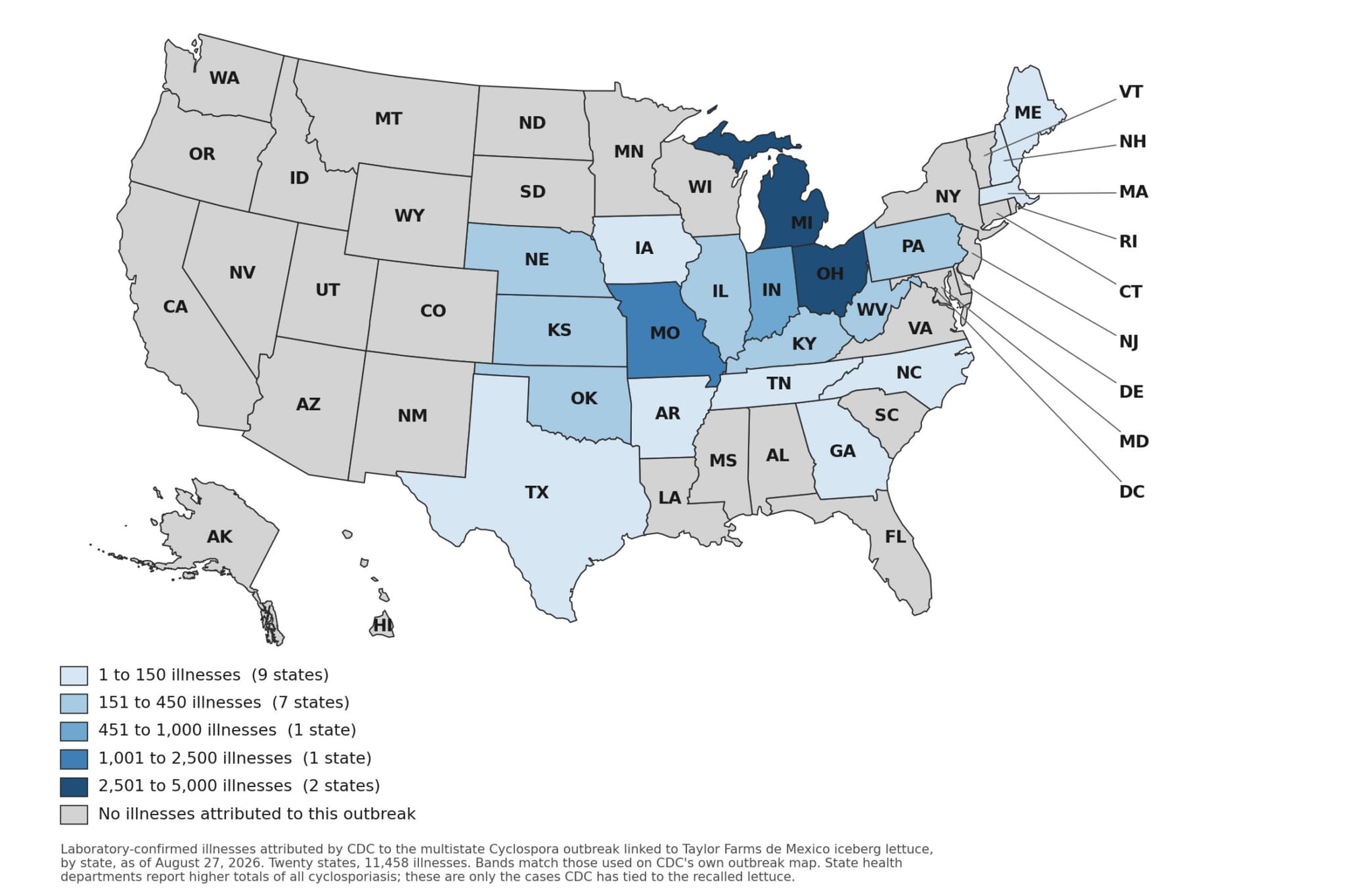
Michigan was the first state to report the Cyclospora outbreak. Its numbers have consistently been running much above the national count. As of Aug. 27, Michigan is reporting 14,510 patients with 356 reported cases indicating they have been hospitalized.
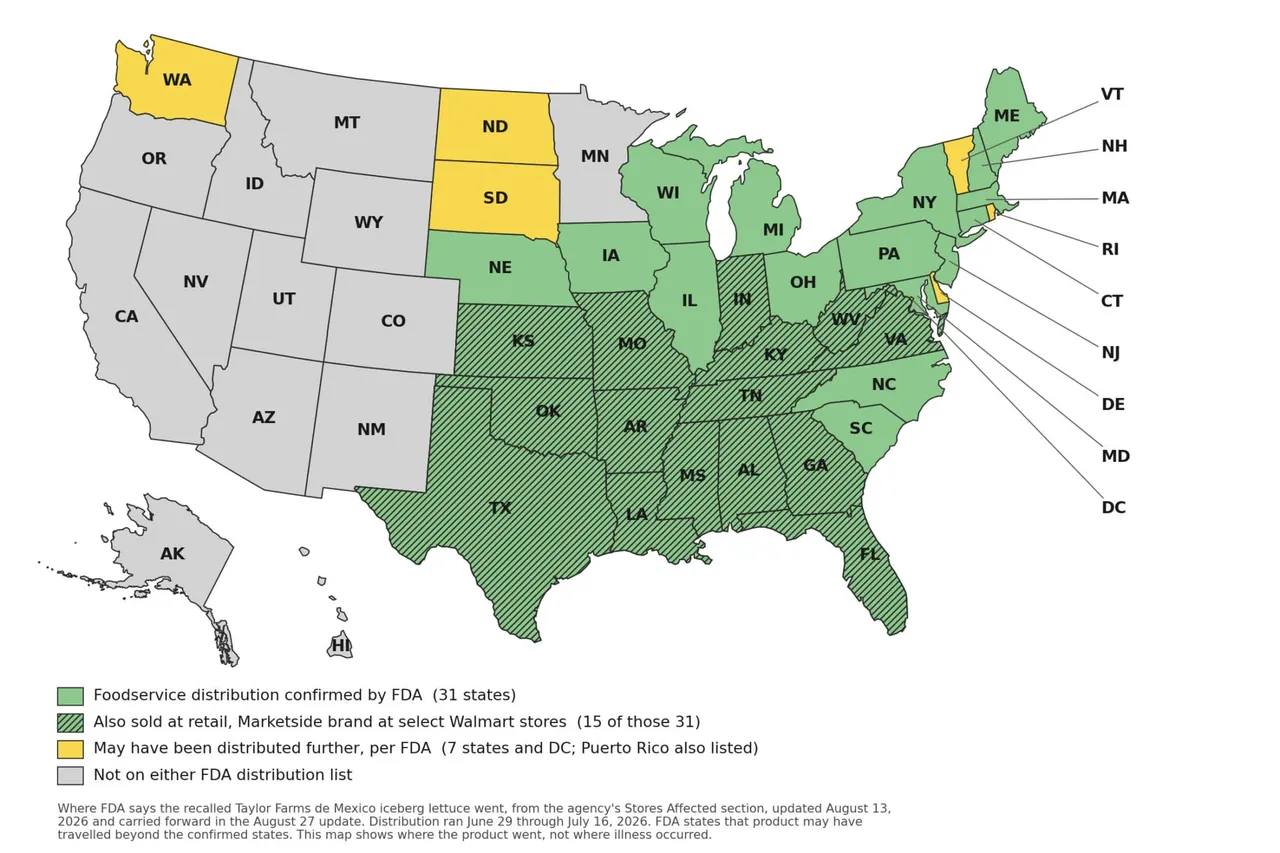
In connection with the outbreak, the Food and Drug Administration is inspecting the Taylor Farms growing and processing facility in Central Mexico. On July 17 the company recalled its iceberg lettuce products, but those products had either been consumed or were past their due dates by the time of the recall.
Taylor Farms sells processed iceberg lettuce products to a wide variety of customers, including restaurants, hospitals, schools, hotels, Sysco and at Walmart stores. Sysco is the country’s largest supplier to food service operators.
Some of the sick people reported eating products that contained iceberg lettuce from Taco Bell restaurants early in the outbreak. Also, 17 patients in New Hampshire reported eating iceberg lettuce at the same hospital salad bar.
The FDA’s onsite inspections and sampling at iceberg lettuce growers and the processing facility in Mexico in coordination with Mexican officials are ongoing. FDA remains confident that all recalled iceberg lettuce related to this specific Cyclospora outbreak is off the market.
The FDA has not reported any specific details about its investigation, but it is known that a public swimming complex is near the Taylor Farms operation. Also, heavy rains earlier in the season in the area caused flooding of sewers and heavy runoff.
About Cyclospora
Food and beverages contaminated with the Cyclospora parasite does not look, smell or taste bad.
Anyone who has developed symptoms of Cyclospora infection, and has reason to believe they have been exposed to the parasite, should seek medical attention. Specific tests are required and antibiotics are used to fight the parasite.
Cyclospora infection can cause severe abdominal pain, explosive watery diarrhea, nausea, vomiting, body aches, and fatigue. Symptoms can develop between two and 14 days after exposure. Though symptoms can be severe enough to send people to the hospital, it's rare for people to die from Cyclospora infections.
Symptoms can last for a month or more and can reoccur for several more months if not treated.
Cyclospora is a microscopic parasite and cannot be seen by the human eye. It is transmitted when people somehow ingest contaminated feces, typically through contaminated food or water. It can be spread only through human waste, unlike E. coli and salmonella, which can also be spread from animal fecal matter.
Previous U.S. outbreaks of cyclosporiasis have been linked to various types of fresh produce, including lettuce, basil, cilantro, mesclun lettuce, raspberries, and snow peas.
Food safety experts say there's no evidence that washing the produce will remove the parasite because it becomes embedded in the flesh of the produce.


