The farm at the center of the nation’s deadly Listeria outbreak did not follow established food safety practices in handling its fresh cantaloupes, federal officials said Wednesday.
In releasing the investigation report on Jensen Farms, Sherri McGarry, a senior U.S. Food and Drug Administration adviser, said there is no reason to believe that the multiple problems identified at Jensen Farms, including equipment, sanitation and temperature-control flaws, are typical of the cantaloupe industry.
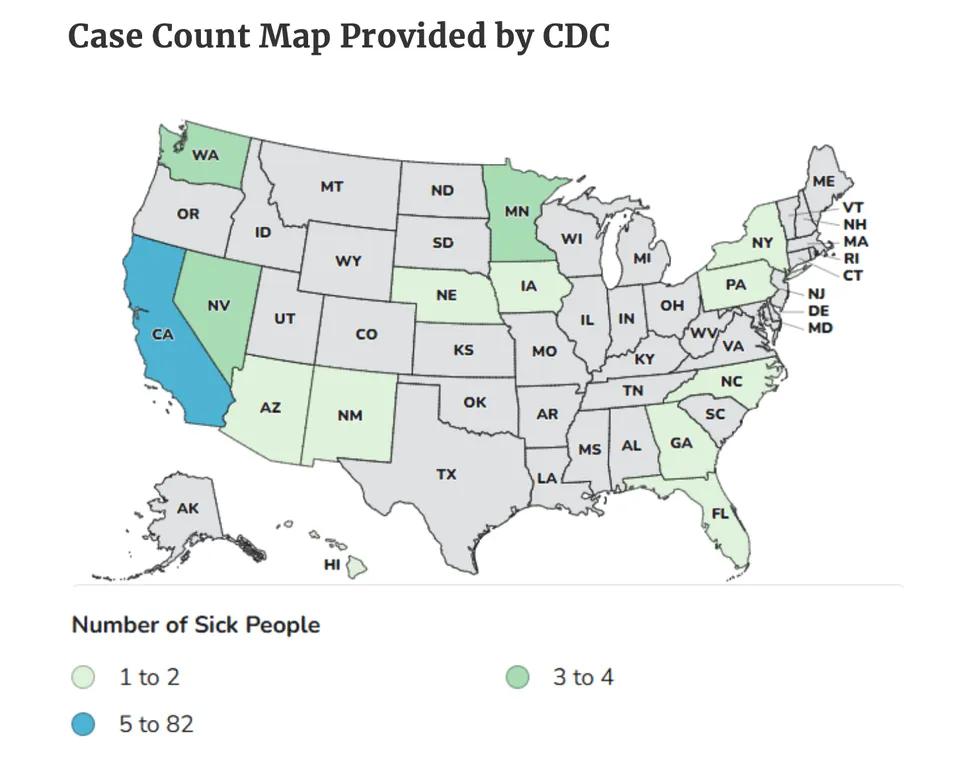
The nationwide outbreak of listeriosis, which has killed 25 people and sickened 98 others, is the first involving Listeria-contaminated whole cantaloupes.
During a media briefing on its investigation into the “root cause” of the outbreak, FDA said its investigators went to Jensen Farms on Sept. 10, after epidemiological and traceback evidence pointed to the Granada, CO packing plant as the source of a cluster of listeriosis cases.
The 39 environmental samples collected during that “regulatory inspection” resulted in 13 that were confirmed positive for Listeria monocytogenes, with pulsed-field gel electrophoresis (PFGE) pattern combinations indistinguishable from three of four strains collected from outbreak patients, according to the FDA warning letter detailing the findings.
Four days later, on Sept. 14, Jensen Farms recalled at least 1.5 million cantaloupes it had shipped to 24 states between July 29 and Sept. 10.
In the 12 days between that first “regulatory inspection” and when an entire squadron of federal and state health officials and scientists returned Sept. 22 and 23 to conduct the full “environmental assessment” of the company’s growing fields and packing plant, Jensen Farms cleaned and sanitized all its cantaloupe processing equipment and food contact surfaces.
That was not enough, however, to cover up the break in basic sanitation conditions that existed at Jensen Farms during its cantaloupe harvest and packing process.
FDA officials said its investigators found no detectable levels of Listeria in the cantaloupe fields, where the pathogen can exist in soil or animal waste. Listeria was found only in the open-air packing facility.
But traces of L. mono bacteria could have come into the plant on cantaloupes or from a truck parked outside that was used to ferry culled cantaloupes to a cattle operation. The bacteria then could have flourished in pooled water, and been tracked and spread around the packing shed, contaminating walkways and equipment. A conveyor belt, and a drying area with a cloth cover, tested positive for the pathogen.
FDA officials also said Jensen Farms had recently begun using machinery that had previously processed potatoes, and that the equipment was corroded and difficult to clean.
The farm’s cantaloupes, warm after harvest, were not cooled before going into cold storage. The condensation on the rind could have promoted the growth of Listeria, FDA said.
Before the first cases of listeriosis were reported, Jensen Farms had another inspection, this one by a outside auditor who gave the packing plant a score of 96 points out of 100, according to the New York Times.
Third-party audits have turned out to be embarrassments before — Peanut Corporation of America, for example, got a “superior” rating from a third party auditor just before its Salmonella-contaminated product killed nine in a nationwide outbreak that made more than 700 people ill. Flying colors also went to Wright County Egg right before the largest recall of table eggs in U.S. history.
Michael Taylor, FDA deputy commissioner for foods, told reporters the agency intends to establish standards for audits, which have roles for both imported and domestic foods under the new Food Safety Modernization Act.
Following the release of the FDA’s investigation report, representatives of the California/Arizona cantaloupe industry, which has been clobbered by declining sales since the Colorado cantaloupes were recalled, were quick to send out statements.
Stephen Patricio of Westside Produce wrote, “mitigation of the identified risk points is an integral part of any food safety program. The cantaloupe industry specifically and the fruit and vegetable industry generally has known the need to establish and follow mitigation practices for these identified risks for more than a decade.”
“The recent tragic outbreak of listeria associated exclusively with a single cantaloupe packing facility in Colorado should not have happened,” wrote Tom Nassif, president and CEO of Western Growers. “We are confident that California and Arizona cantaloupe producers have the controls and preventive practices in place to ensure the safety of the over 45 million cases of cantaloupes, 85 percent of the total U.S. volume, grown in this region.”
In opening the briefing on the “root cause” report, FDA Commissioner Margaret Hamburg praised the cooperative effort among state and federal agencies that enabled officials to quickly trace the outbreak strains to the single Colorado cantaloupe farm. She and other officials expressed condolences for those who have died in the outbreak.
The Listeria outbreak isn’t over, according to Barbara Mahon, deputy chief of the enteric disease branch of the federal Centers for Disease Control and Prevention. It will be a couple more weeks, she said, before CDC will know that it has ended.