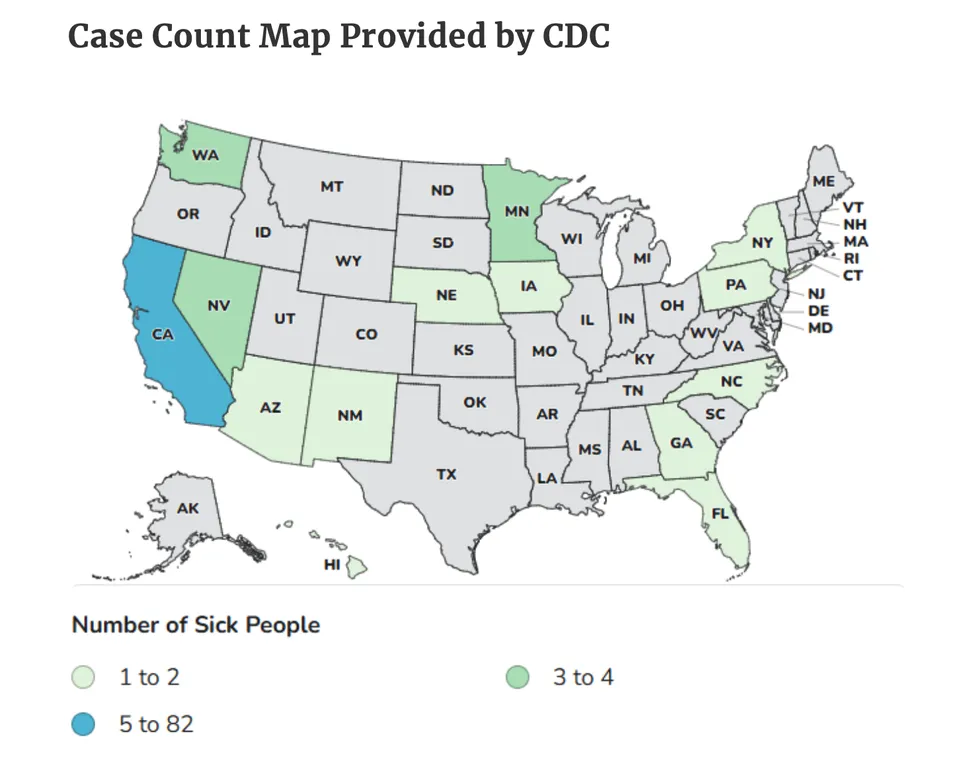
Escherichia coli O157:H7 caused more outbreaks in the United States from 2003 through 2012 than during the previous 20 years, according to authors from the Centers for Disease Control and Prevention (CDC). Writing in the August edition of Emerging Infectious Diseases, CDC’s Katherine E. Heiman, Rajal K. Mody, Shacara D. Johnson, Patricia M. Griffin, and L. Hannah Gould teamed up to review recent E. coli O157 outbreak data. The picture they paint for the 10-year period is a familiar one — a pathogen mostly associated with beef, with outbreaks peaking in the summer. But it’s more complicated that that. Since 2012, summers have not seen multiple beef-related O157 outbreaks.

The complexity of O157 outbreak patterns is also revealed in the CDC study for 2003 to 2012. During those 10 years, the authors identified a half-dozen foods other than beef that were sources of O157 outbreaks, including poultry, other meat, dairy, leafy vegetables, fruits, sprouts and nuts. Their “other foods” category is a long list. In the article, the authors report that a total of 390 E. coli O157 outbreaks occurred nationally during the 10-year period. In 65 percent of those, a total of 255 incidents, food was the transmission source. Animal and person-to-person contact were each responsible for 39 outbreaks, water for 15, and, in 42, the source was other or unknown. “We identified 390 outbreaks, which included 4,928 illnesses, 1,272 hospitalizations, and 33 deaths,” the authors wrote. Physician-diagnosed hemolytic uremic syndrome (HUS), a severe complication of E. coli infection that can lead to kidney failure, occurred in 299 cases. That “other foods” category shows just how broad the range of foods has become that can transmit the often deadly O157 pathogen. It includes guacamole, pico de gallo, salsa, potato salad, cooking dough, alfalfa sprouts, iceberg lettuce, baked beans, meatballs, steak, green salad, cantaloupe, lamb, green grapes, lime and bean dip, macaroni, Mexican wheat snacks, sandwich, seafood, vegetable-based salad, pepperoni, jerky, and multiple foods and fruits. Beef was responsible for 78, or 20 percent, of the outbreaks. “Beef, particularly ground beef, continues to be the major source of E. coli O157 outbreaks, likely because cattle are the source of E. coli O157 outbreaks,” the authors note. Interestingly, the authors state that outbreaks associated with other transmission sources may be more severe than those related to beef. “Our findings that outbreaks attributed to leafy vegetables, dairy products, fruits and other meats were more severe than outbreaks attributed to beef could have several explanations, including strain virulence and patient age and sex,” they wrote.
(To sign up for a free subscription to Food Safety News, click here.)