There are now 103 reported Salmonella victims following a fundraising barbecue held Sept. 7 at a church in Shelby, NC. News reports on Wednesday stated that there were now 45 cases in Cleveland County, 52 in Rutherford County and five in other North Carolina counties. Another Salmonella case was previously reported in South Carolina. Pastor Garin Hill of the Sandy Plains Baptist Church was quoted as saying that as many as 5,000 people come to the annual event for barbecued pork and chicken, and that such an outbreak has never happened before. Salmonella infection is usually caused by eating raw or undercooked meat, poultry, eggs or egg products. Symptoms can include diarrhea, fever, and abdominal cramps and usually last between four to seven days.
The News Desk team at Food Safety News covers breaking developments, regulatory updates, recalls, and key topics shaping food safety today. These articles are produced collaboratively by our editorial staff.
Authorities in Lithuania are investigating two cases of foodborne botulism linked to fish sold at a market.
The State Food and Veterinary Service (VMVT) conducted an inspection at a market
Parents in Arizona are reporting that their children became infected with E. coli after interaction with animals at the Arizona State Fair petting zoo.
A non-profit group that works
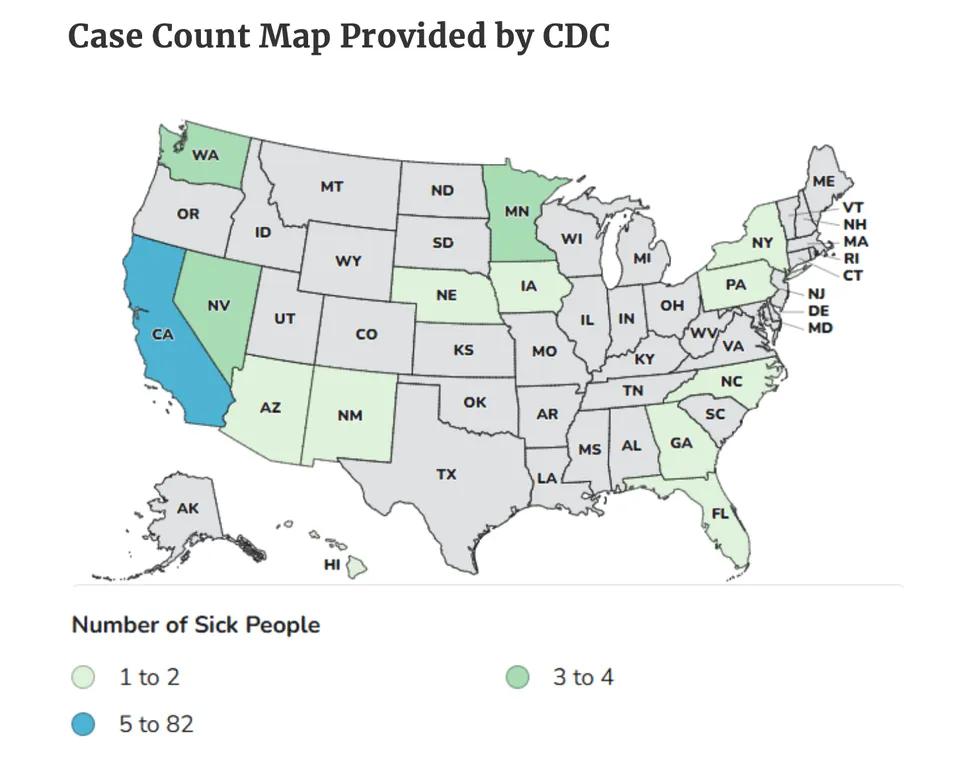
A Salmonella Enteritidis outbreak traced to eggs that sickened more than 100 people has been declared over by the Centers for Disease Control and Prevention.
There were 105 confirmed patients
Wild West Seed Inc. is recalling almost 10,000 pounds of broccoli sprouting seeds because of Salmonella contamination.
The Albany, OR, firm reports that 9,476 pounds of its Broccoli
The Food and Drug Administration uses import alerts to enforce U.S. food safety regulations for food from foreign countries. The agency updates and modifies the alerts as needed.
Recent
Krasnyi Oktyabr Inc. of Brooklyn, NY, is voluntarily recalling STARFISH SEAFOOD PREMIUM COLD SMOKED NORWEGIAN SALMON SLICED because the product has tested positive for Listeria monocytogenes.
The STARFISH SEAFOOD PREMIUM