As it turns out, the food stores and restaurant chains promising to sell only cage-free eggs by some date in the future and egg producers have been doing their due diligence when it comes to the housing of laying hens. Recently released findings of the Laying Hen Housing Research Project by the Coalition for Sustainable Egg Supply look at the advantages and disadvantages of three types of hen housing in five areas:
Cage-free does not mean the same thing as free range. animal health and well-being;
food safety and quality;
environmental impact;
worker health and safety; and
food affordability.
The three housing types included in the study were conventional cages that are also called battery cages, enriched colony setups, and cage-free aviary operations. The research was conducted over two years and involved two flocks living in each type of housing system. Hens in all the housing systems shed Salmonella at similar rates and the prevalence of Salmonella associated with egg shells was low and did not differ between housing systems, according to the researchers. The highest environmental microbial levels were found in the aviary system litter area and on the enriched system scratch pad. Aviary floor eggs also had significantly higher levels of microorganisms that other types of eggs sampled.
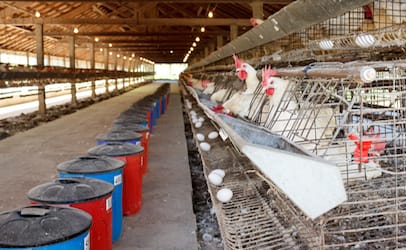
This is an example of a battery cage egg operation.
Housing systems did not influence the rate of egg quality decline though 12 weeks of extended storage and U.S. egg quality standards and grades were found to be adequate for all three housing systems. The coalition — led by McDonald’s, Cargill Kitchen Solutions, the American Humane Association, Michigan State University, the University of California-Davis and the Center for Food Integrity — also found housing types did not result in differences in the immune systems of hens or the effectiveness of their Salmonella vaccinations. Aviary forage areas and scratch pads in enriched colonies had the highest levels of total aerobes and coliform. Aviary floor eggs had the highest total aerobes and coliform levels. The researchers also found the dry belt manure removal system impeded the detention of Campylobacter spp. “It’s important to note that management practices likely had the greatest influence on environmental and off shell microbiology,” said the researchers. They said egg quality was not effected by the housing type, but hen dietary nutritional changes did make a difference. In findings outside the food safety concerns, the study found cage-free aviary eggs would cost consumers 36 percent more than conventional battery cages. Enriched systems would cost 14 percent more than conventional. The higher costs are driven by higher feed, labor, pullet and capital costs. Worker health and safety is another major downside for cage free systems. The study found workers were exposed to significantly higher concentrations of airborne particles and endotoxin — toxic components of bacteria — when working in aviary houses than in conventional or enriched houses. Workers tasked with gathering eggs from floors also faced “ergonomic challenges” in addition to respiratory hazards. The research focused on indoor only systems because those are the most commonly used in commercial egg production. All housing types were studied at the same location, a farm in the Midwest. Funding came from the Center for Food Integrity, which provided about $3 million each for MSU and UC-Davis. The conventional housing accommodated about 200,000 hens while the aviary and enriched units each housed 50,000 hens. (To sign up for a free subscription to Food Safety News, clickhere.)
Veteran journalist with 15+ years covering food safety. Dan has reported for newspapers across the West and earned Associated Press recognition for deadline reporting. At FSN, he leads editorial direction and covers foodborne illness policy.
Heath Secretary Robert F. Kennedy Jr., again promised on Monday that The Dietary Guidelines for Americans, 2025-2030, will be released to the public in December.
If available by Christmas, many
— OPINION —
By Sarah Sorscher
Last week, some of the biggest players in Big Food, including household names like Nestlé, Coca-Cola, General Mills, Hormel and PepsiCo, teamed up to launch a
As November approaches, with the federal government shutdown now in its third week, suspension of food stamps for the hungry is becoming increasingly likely.
There was sufficient federal funding in
Consumer Reports is urging the FDA to establish strict limits on lead in protein powders and shakes in light of its new investigation that found troubling levels of toxic heavy
"Products containing 7-OH (which are frequently brewed into tea) are illegal under federal law,” said Assistant Attorney General Brett A. Shumate of the Justice Department’s Civil Division.
Under the program, Nevada will expand its state inspection capacity with food safety oversight to boost market access for small and very small processors.
A federal Grand Jury indictment has been filed against multiple suspects, including four defendants, with names redacted, who were formerly employed with Fayette Industrial Services. They are being charged with