Header graphic for print
Food Safety News Breaking news for everyone's consumption

E. coli in ‘Tiger Meat’ Sickens 3 in Wisconsin

At least three people in Wisconsin have contracted E. coli infections thought to have been caused by eating “tiger meat,” a raw ground beef dish.

The beef linked to the outbreak was purchased at Glenn’s Market and Catering of Watertown, WI, which recalled 2,532 pounds of raw ground beef products Tuesday for potential E. coli contamination.

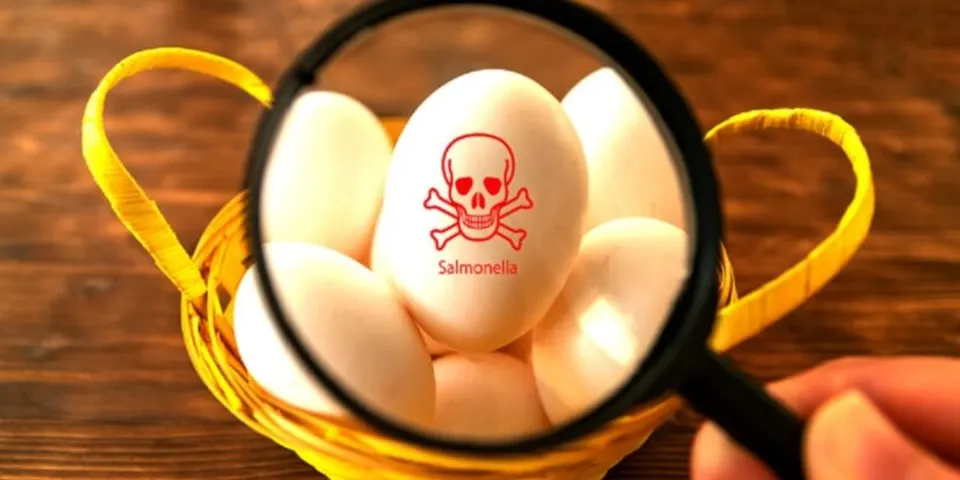
Tiger meat is a mixture of raw ground beef, raw eggs, onions and seasonings. Both ground beef and eggs pose a health hazard when eaten undercooked or raw. It is thought that the victims of this outbreak prepared the raw ground beef purchased at Glenn’s in this style.

“Glenn’s would also like to make the public aware that consuming the common holiday tradition called Tiger Meat of Raw Uncooked Beef can cause illness,” said the firm in a press release  on its website. “But the USDA has a zero tolerance level of E.coli 0157:H7,” notes the firm.

Products subject to the recall include Glenn’s Market ground round, ground chuck and ground beef sold in packages of varying sizes between Dec. 22, 2012 and Jan. 4, 2013. 

Patients sickened by the raw ground beef fell ill between Dec. 29, 2012 to Jan. 1, 2013, according to the U.S. Department of Agriculture’s Food Safety and Inspection Service.

Two reported consuming beef from Glenn’s that was ground and purchased on Dec. 24, 2012, reports FSIS. The third consumed product ground and purchased on Dec. 30, 2012.

The company notes that safe handling instructions are included on packaging.  

© Food Safety News
  • husna

    If the consumers ate “raw meat” and got E.coli infection, then why was the meat recalled? Am I missing something here??

    • johnmunsell

      Because of USDA’s alleged “Zero Tolerance” policy, no raw meat can have E.coli in it.  However, please read my more extensive comments above to realize how the agency allows from 8.3% – 20% e.coli positives in raw meat, and not take any enforcement actions. 

      Oginikwe’s comment above regarding eating raw mass produced food is spot on.  All raw meat is risky, in spite of USDA’s disengenuous “Zero Tolerance” claim.  Because of the agency’s Zero Tolerance claim, consumers are mislead into thinking that all USDA-Inspected & Passed meat is safe to eat……because of Zero Tolerance!  Talk about deceptive truth in advertising! 

      But it has excellent PR benefits!

      John Munsell

      • husna

        Mr Munsell..thank you for touching base on the zero tolerance policy. I am aware of it and the recall criteria.

        Now let me give you my analysis of the scenario:

        The ingredients that constitute “Tiger meat” can all be prone to contamination. E.coli from beef, Salmonella from raw Eggs, L.monocytogenes from onions (if diced and refrigerated long term), and depending on the ingredients in the seasoning, maybe prone to gram negative and gram positive bacteria  (oh.. let’s not forget the possible contamination by sporeformers in spices).

         Every packaged meat has cooking instructions (adequate cooking temperature) to provide safe food consumption guidelines. In this scenario, the consumers prepared the meat themselves, and choose not to follow the cooking guidelines, and consumed the meat raw.

         From the previous articles of the past week on this website, it is clear that certain food safety violations at food preparation facilities can contribute to the consumer ending up getting sick from E.coli contamination. Therefore, one cannot ignore the fact that the outbreak in this scenario maybe due to ”food safety violations” by the consumer, and not by the processor/Glen’s Market, if the latter can prove that the meat at the market was microbiologically evaluated (in accordance with USDA guidelines) before leaving its facility.

        • johnmunsell

          I agree with you, except for your last sentence.  All meat is not microbiologically evaluated before leaving facilities.  In small plants, microbial samples might be collected once monthly, or once every 3 months, as examples.  All other meat is shipped into commerce without sampling for lab testing.  For good reason!  When I sent samples to an outside lab, the total cost to me for FedX overnight shipping, and lab fees, was around $70 each.  To test each grind would be prohibitively expensive. 

          Secondly, negative lab test results are NOT a guarantee of product safety.  Both USDA & the industry agree that testing MIGHT indicate the presence of pathogens.  USDA’s own OIG investigated the efficacy of the agency’s N-60 trim testing protocol a year ago.  Because of the low incidence of E.coli in boneless trim, OIG concluded that the agency’s N-60 testing protocol is just as likely to NOT detect the presence of E.coli as to detect it.

          John Munsell

  • Oginikwe

     ”Tiger meat”?  We used to call this steak tartare and served it on black rye bread.  Eating raw mass produced food is not a good idea.  If the ecoli in the meat doesn’t get you, surely the salmonella in the raw egg will.

  • johnmunsell

    The article above states that the USDA has a “Zero Tolerance” policy against the 7 E.coli STEC’s.  This requires further definition.

    In May, 2012, USDA issued a “Compliance Guideline for Establishments Sampling Beef Trimmings for Shiga Toxin-Producing Escherichia coli (STEC) Organisms or Virulence Markers”. 

    Page 8 of the Guidelines discusses High Event Periods (HEP), which are days in which adverse microbial sampling results reveal either a “localized out-of-control event” causing a clustering of E.coli STEC”s in contaminated product, or indicates “…a systemic break-down or inherent weakness of the process or food safety system”. 

    Page 9 of the Guidelines assigns an acceptable/unacceptable incidence of lab positives before the agency concludes that a HEP has occurred.  Under paragraph 2 (A) & (B) on page 9, the agency shockingly allows from 8.3% to 20% adverse lab positives before concluding that a HEP may have occurred.  The wide range in acceptable positives is determined by the number of samples taken by establishments, which can range from 30 consecutive samples to more than 60 samples in one day by the meat plant. 

    Folks, USDA’s Zero Tolerance claim is a sham.

    Another agency document (which is not at my fingertips), also reveals that when a HEP has occurred, the agency’s District Office has 30 days to decide whether agency enforcement action is justified at the plant.  This means that for those 30 days, the plant suffering from a HEP can continue to operate as is, with no need for corrective actions, continue to experience subsequent adverse lab positives, and ship contaminated meat into commerce to downstream plants such as Glenn’s Market & Catering.  Such delays do not qualify for the agency’s vaunted “Abundance of Caution”.

    But, rest assured that USDA will take aggressive actions against Glenn’s Market & Catering!

    John Munsell

  • johnmunsell

    FSIS is blithely disconcerned with cross-contamination risks.  Quoting from attorney Denis Stearns’ article in the Fall 2005 edition of “Journal of Food & Law Policy”, pages 387 & 388, Mr. Stearns stated “Indeed, a primary criticism of USDA is the fact that the Agency has consistently failed to focus upon the risks of cross-contamination versus improper cooking”.  Mr. Stearns quoted from an Executive Summary of the National
    Academy of Science, which noted “that the lack of data concerning the impact of cross-contamination of E.coli O157:H7 during food preparation was a flaw in the Agency’s risk-assessment”

    Little has changed in the interim.  The fact that FSIS considers STEC’s which reside on the exterior of intact meat cuts to NOT be adulterants proves that the agency lacks the fortitude to consider STEC’s as adulterants in whatever form they are found after the kill floor.  The agency’s cowardice constitutes a Pass Card to the major slaughter plants.  FSIS could care less about cross contamination emanating from downstream further processing of those intact cuts. 

    FSIS has two solutions to this imbroglio:
    1.  Just cook it, stupid.
    2.  Place all blame on the downstream entity which innocently purchased USDA-Inspected & Passed meat which is laced with invisible pathogens.

    Yup, a “Science-Based Abundance of Caution”!  Egads, are we functional illiterates?  FSIS thinks so.  Maybe the agency is right.